The Trail Around Minneapolis's Chain of Lakes Just Reopened. The Premium Hasn't Settled Yet.
October 1, 2026
October 1, 2026
According to Hill & Lake Press, the paved corridor linking Cedar Lake, Lake of the Isles and the Midtown Greenway sat behind construction fencing for the better part of seven years. This past winter, it reopened. Cyclists and pedestrians got back a route the Metropolitan Council once estimated carried close to a million visits a year, with the Kenilworth segment alone handling roughly 2,100 cyclist trips and 400 pedestrian trips on a typical day before the fences went up. The Rails to Trails Conservancy has a name for what this corridor used to be before Southwest Light Rail construction closed it in 2019: "America's first bike freeway."
Then, on September 26, Metro Transit held an event two miles west in St. Louis Park to announce when the Green Line Extension will actually start running trains. The answer is 2027. The trail is open again. The transit line it was built for is not.
That gap matters more than it looks like on a listing sheet. Anyone who bought a home along Kenwood Parkway, in Cedar-Isles-Dean, or on the west side of Bde Maka Ska anytime between 2019 and this winter was paying a Chain of Lakes premium for an amenity that was, for most of that stretch, a detour route with a chain-link fence running through it. The trail is back. The construction zone two miles away is still active. If you're comparing what a home near these lakes actually buys you against what a Lake Minnetonka suburb buys you, this is the piece of the picture a median price alone won't show.
The Cedar Lake Trail opened in 1995 as the first federally funded rail-to-trail conversion in the country. It ran two bike lanes and a separate walking path parallel to the BNSF line out of downtown, and it fed directly into the Kenilworth corridor, the wooded stretch separating Cedar Lake from Lake of the Isles, and from there into the Midtown Greenway. Together those three routes made up what Minneapolis officials have called the most heavily used trail system in the city's park network.
Then the Southwest Light Rail project needed that same corridor. Track installation and the construction of three new stations shut down key segments starting in 2019, and much of the route stayed closed for nearly seven years while a new bridge was built over the channel connecting Cedar Lake and Lake of the Isles. The Minneapolis Park and Recreation Board's trail page still lists the Kenilworth Regional Trail as running through that corridor. What it doesn't say is how long a resident buying a home nearby had to take the long way around to use it.
The trail reopening this winter didn't mean the disruption was over. It meant the disruption moved. As of this year, the Metropolitan Council's own construction updates describe landscaping in the Kenilworth corridor as roughly half finished, with more than 8,000 new shrubs and perennials and 20 acres of ornamental grass still being installed through this fall and into next spring. Access along Cedar Lake Trail near West Lake Street continues to see brief disruptions for equipment work.
The announcement came at Louisiana Avenue Station in St. Louis Park. That's not a footnote. It's confirmation that the corridor running past Kenwood, Cedar-Isles-Dean and the western edge of Bde Maka Ska is still mid-transition, with one more infrastructure milestone still to land before the area settles into whatever its post-construction identity turns out to be.
For a buyer weighing a home near this stretch of the Chain of Lakes right now, that's worth sitting with. You'd be buying into a neighborhood that just got its recreational corridor back and hasn't yet absorbed the transit line that corridor was built around.
Kenwood is a useful case study in how thin a "hot" market can actually be. Platted in 1887 and marketed even then as suited to elegant residences, the neighborhood today holds about 540 residential structures, most of them single-family, many dating to the early 1900s. That's not a large pool of comparable sales in any given month, and the pricing data reflects it.
One source pegged Kenwood's median sold price at $1.2 million as of June 2026, with an average sale price of roughly $1.35 million across 13 houses on the market that month, ranging from $1,095,000 to $4,599,000. A different tracker, looking at March 2026, put the median list price at $1.79 million and the median price per square foot at $395, both down sharply from the same month a year earlier. A third source, tracking only Kenwood's luxury tier, found 15 homes with a median listing price of $1.75 million and a typical 47 days on market.
These aren't small rounding differences. They're the predictable result of measuring a market with a dozen or so transactions a month from three different angles: sold price versus list price, full range versus luxury subset, one month's snapshot versus another's. In a market this size, one $4.6 million estate sale or one $700,000 fixer can swing a median by six figures. Compare that to Linden Hills, just south, where a larger and steadier pool of sales gave a median price of $700,000 in February 2026, up 7.3 percent year over year, at $316 per square foot, with homes averaging 52 days on market. Minneapolis citywide, over the three months ending in July 2026, posted a median sale price of $375,000 at $240 per square foot, with homes typically fielding three offers and selling in about 20 days.
| Area | Median price | Price per sq ft | Typical days on market |
|---|---|---|---|
| Minneapolis citywide (3 mo. ending July 2026) | $375,000 | $240 | ~20 |
| Linden Hills (Feb 2026) | $700,000 | $316 | 52 |
| Kenwood (sources vary, 2026) | $1.2M to $1.79M | $395 (one source) | 36 to 61 |
Read that last row as a caution more than a fact. A single number for Kenwood doesn't exist the way it does for Linden Hills or the city as a whole. The spread is the data point.
The lakes themselves haven't changed. Bde Maka Ska Park still has three beaches, a boat dock, sports fields and an archery range, with a walking and biking trail bordering the water for about three miles. Lake Harriet still hosts free summer concerts at its bandshell and sunrise yoga between Memorial Day and Labor Day. Each winter, Bde Maka Ska hosts Art Shanty Projects, a four-weekend festival where artists build structures directly on the frozen lake.
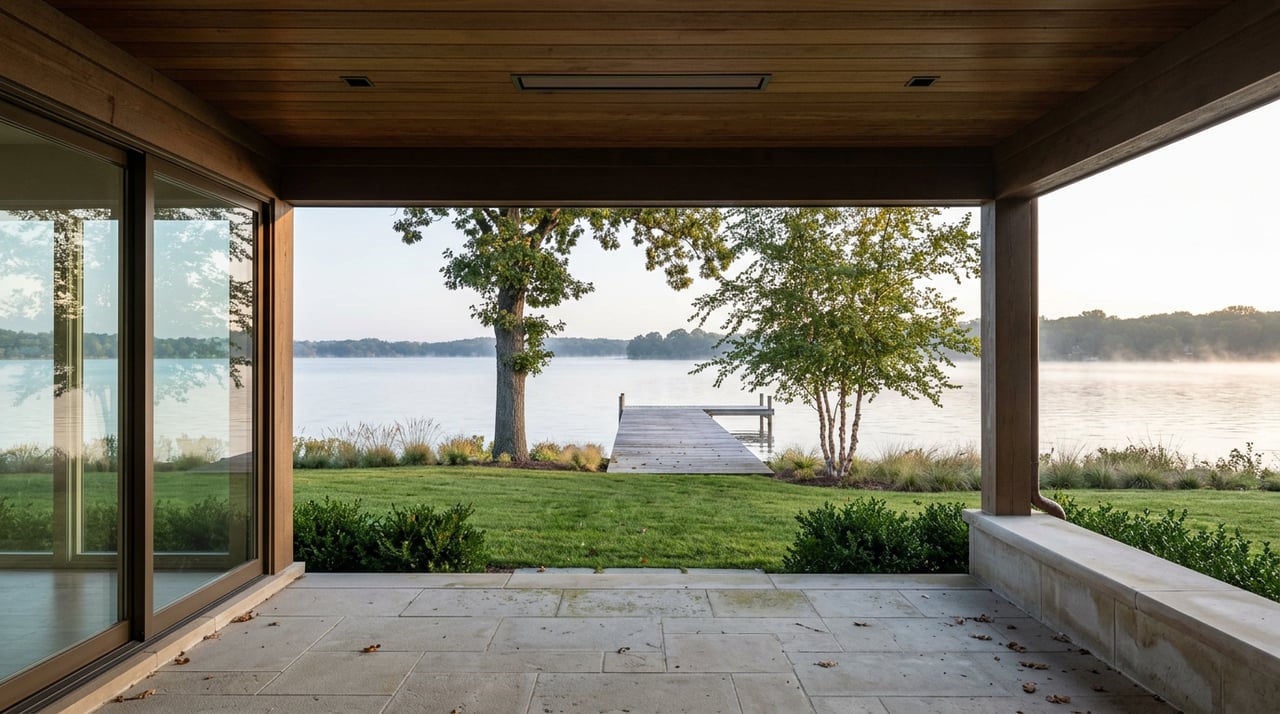
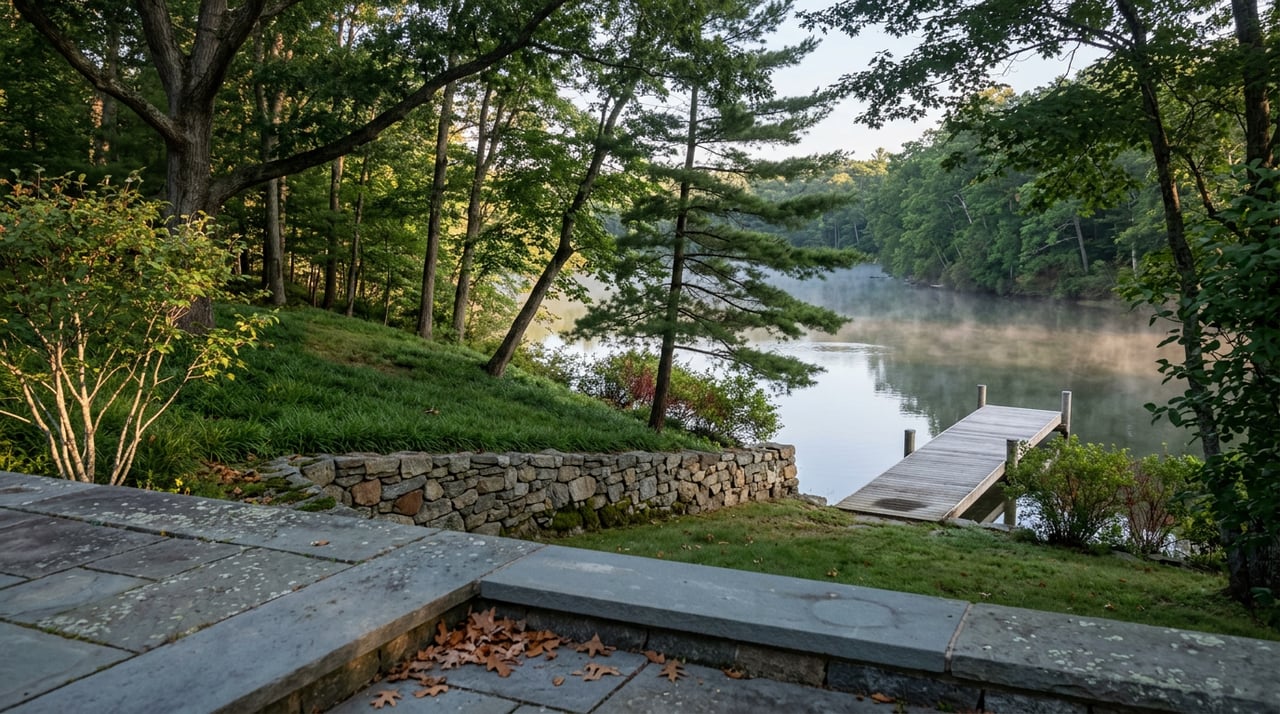
What none of these lakes offer is a private dock you can tie a boat to. This is urban lake living built around kayaking, canoeing, sailing and shoreline paths rather than motorized watercraft and private slips. That's a meaningful distinction for a buyer trying to decide what kind of lake life actually fits their weekends, and it's a genuinely different product from a Lake Minnetonka property with its own dock and open water access. Neither is a better answer. They're different answers to the same question, and the trail closure is a reminder that one of them came with seven years of construction attached to the amenity being sold.
Whatever was happening along the rail corridor, the retail nodes around these lakes kept running. Linden Hills Village, centered on 43rd Street and Upton Avenue, still anchors daily life around the Linden Hills Co-op, with Tilia, Martina, Colita, Convention Grill and Old Southern BBQ handling the dining side and Wild Rumpus Books and Sebastian Joe's Ice Cream holding down the corner culture. The Linden Hills Farmers Market still runs May through October in the parking lot of Settergren's Hardware.
Kenwood's smaller commercial stretch on West 21st Street holds Birchbark Books, Bockley Gallery and The Kenwood restaurant, with Kowalski's Market and Whole Foods a short trip up Hennepin Avenue. None of that depended on whether the Kenilworth Trail was fenced off. It's the part of Chain of Lakes living that a construction timeline never touched.
If you're a buyer weighing a home near the Chain of Lakes against one in a Lake Minnetonka suburb like Wayzata, Deephaven or Orono, the trail's history is a fair question to ask on a showing. Was this specific block affected by the Kenilworth closure. Is it within the stretch still finishing landscaping. What did comparable homes here sell for in 2019, before the fencing went up, versus now. Those answers tell you more about what you're actually buying than a single median ever will, and I'd want them in hand before trusting any one number for a specific block.
Ready to compare what a Chain of Lakes address and a Lake Minnetonka address would each actually cost you this fall? Molly Cardinal can walk through the specific blocks, the specific trail history, and the specific numbers behind either one.
Stay up to date on the latest real estate trends.
Molly is passionate about helping her clients find their perfect home and bringing clarity to real estate transactions. She drives the home search through education, communication, and honesty, creating an environment where clients feel comfortable asking questions and expressing their goals they are able to reach together.